

There’s a moment early in Kyle Idleman’s “Not a Fan” where he describes officiating a wedding and realizing, mid-ceremony, that half his job as a pastor had quietly become managing fans rather than making followers. That single realization is the seed the whole book grows from — and it’s worth understanding before diving into the summary below.
What Is “Not a Fan” About?
At its heart, the book argues that there’s a massive, often invisible gap between admiring Jesus and actually following Him. Idleman calls the first group “fans” — people who like what Jesus stands for, show up when it’s convenient, and speak well of Him without ever restructuring their lives around Him. The second group, “followers,” are the ones who’ve handed over control: their time, their money, their comfort, and their plans. The book’s entire argument is that Jesus was never trying to build the first group. He kept saying things designed to filter for the second.
Fan or Follower? A Quick Checklist
Idleman doesn’t hand readers a formal checklist, but the contrasts scattered throughout the book add up to something close to one:
A fan attends church regularly but keeps faith in a separate compartment from work, money, and relationships. A follower lets faith reshape all three, even when it’s inconvenient.
A fan gets emotionally moved during a sermon or worship set but rarely translates that emotion into a changed decision. A follower treats conviction as something to act on, not just feel.
A fan wants enough of Jesus to feel spiritual without wanting so much that it costs anything real. A follower has made peace with the cost being real.
Reading through that list is usually where the book stops being theoretical for most readers and starts feeling personal.
In Idleman’s Own Words
Some of the sharpest lines in the book get repeated constantly in sermons, because they distill the argument down to a single sentence. Idleman keeps returning to the idea that enthusiasm isn’t the same as devotion — that a fan can be more emotionally worked up in a worship service than an actual follower ever is, which is exactly what makes fandom so easy to mistake for the real thing. If you’re looking for the specific Kyle Idleman’s “Not a Fan” quotes that circulate most often, most come from the chapters where he directly contrasts fan language (“I love Jesus”) with follower language (“I’m surrendering to Jesus”) — the shift in phrasing is small, but the shift in meaning is the entire point of the book.
Common Questions Readers Ask
Is this book aimed at non-Christians or church regulars?
Mostly the latter. Idleman is writing to people already inside the church, precisely because he thinks fandom is a problem the church produces, not one it prevents.
Does the book offer a plan for becoming a “follower”?
Not a five-step program, no. It’s built more around conviction than instruction — Idleman trusts that once the fan/follower gap is clearly named, readers will know which areas of their own life need to change.
Is it a hard or discouraging read?
Most readers describe it as convicting rather than discouraging. The tone stays warm and story-driven even when the content is blunt.
What the Reviews Say
Search through enough “Not a Fan” reviews, and the same word keeps showing up: uncomfortable. Readers consistently describe the book as one that got under their skin in a good way, forcing an honest look at whether their faith has actually cost them anything lately. The most common critique found in a typical “Not a Fan” book review is that the fan/follower framing can feel a little black-and-white — real spiritual life has ebbs and flows that don’t always map neatly onto one category or the other. Even critics who raise that point tend to agree the core challenge is worth sitting with anyway.
Where Holy Reads Fits In
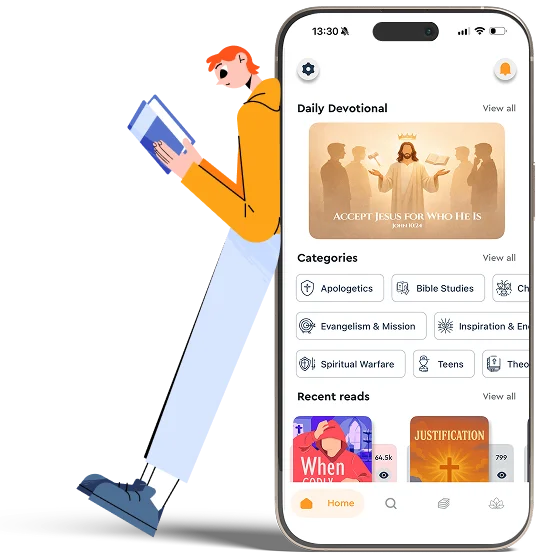
If you want the fan/follower framework, Idleman’s key illustrations, and his most quoted lines without reading the whole book cover to cover, Holy Reads has a complete “Not a Fan” summary built for exactly that. It’s also a solid way to preview the book before deciding whether to read it in full, or to revisit the core argument later without flipping back through your copy.
The Bottom Line
Idleman’s question isn’t complicated to understand — it’s complicated to answer honestly. Are you cheering for Jesus from a safe distance, or have you actually handed Him the parts of your life that are hard to give up? That question is the whole book in miniature, and it’s exactly why “Not a Fan” keeps showing up in small groups and reading lists more than ten years after it was first published.