

Grief doesn’t ask permission. It shows up in the middle of a grocery store, during a meeting, at 3 a.m. when the house is too quiet. You think you’re past it, and then a song on the radio undoes you completely. This isn’t weakness. This is what loss does to a person who loved well.
Scripture doesn’t sanitize this. Job tore his robe and sat in ashes for seven days before he said a single word. David wrote entire psalms that are just raw, unfiltered anguish: “How long, O Lord? Will you forget me forever?” (Psalm 13:1). These aren’t men with weak faith. These are men whose faith was strong enough to be honest with God instead of performing peace they didn’t feel.
If you’ve been told that a “good Christian” grieves quietly and gets over it fast, drop that idea. It’s not biblical. It’s cultural, and it’s wrong. Coping with loss as a Christian doesn’t mean skipping the pain. It means bringing the pain somewhere.
What the Bible Doesn’t Promise — and What It Does
Here’s the part nobody wants to hear: the Bible never promises grief will be quick, comfortable, or fully explained. It doesn’t promise you’ll understand why. Job never got an answer to “why.” He got God’s presence instead, and somehow that was enough.
This matters because so much Christian grief support fails right here. People reach for verses that promise comfort and skip past the ones that simply sit in the dark. But Scripture’s honesty is its strength. Ecclesiastes says there’s “a time to mourn” (3:4), not a time to rush past mourning. Jesus himself wept at Lazarus’s tomb, even though he knew he was about to raise him from the dead. He didn’t skip grief because he had a plan. He let it be real first.
What the Bible does promise is presence. “The Lord is close to the brokenhearted” (Psalm 34:18). Not far off, waiting for you to clean yourself up. Close. Right there in the mess.
Voices in Scripture That Understood Loss
Naomi lost her husband and both her sons in a foreign land and told people to stop calling her by her old name. “Call me Mara,” she said, “because the Almighty has made my life very bitter” (Ruth 1:20). That’s not a woman pretending. That’s a woman telling the truth, and the Bible records it without correction.
David lost a child and wept until the boy died, then got up and worshipped. People misread this as David moving on fast. He didn’t. He grieved before the loss and after it, in his own order, on his own timeline. Nobody handed him a script.
Jesus stood at a grave and cried, even with resurrection power in his hands. “Jesus wept” is the shortest verse in the Bible for a reason. Grief doesn’t need a paragraph to be legitimate. It needs to be felt.
These aren’t side characters. They’re proof that grief and faith were never meant to be opposites. You can be devastated and devoted at the same time. Scripture doesn’t just allow that. It models it on nearly every page.
Finding Your Footing: Practical Ways to Grieve With God
Start where the psalmists started: say what’s actually true. Not the polished version. Pray the angry prayer, the confused prayer, the “I don’t understand you right now” prayer. God has heard worse and hasn’t flinched.
Read the psalms of lament instead of skipping to the happy ones. Psalm 22, Psalm 88, Psalm 42. Let someone else’s words carry you on the days you have none of your own.
Let people see it. Naomi didn’t grieve in private. She told her community exactly where she stood. Isolating yourself from other believers during loss usually makes the weight heavier, not lighter.
Give it time without a deadline. There’s no verse that says grief expires after a set number of weeks. Job sat in silence for seven days before anyone, including God, rushed him.
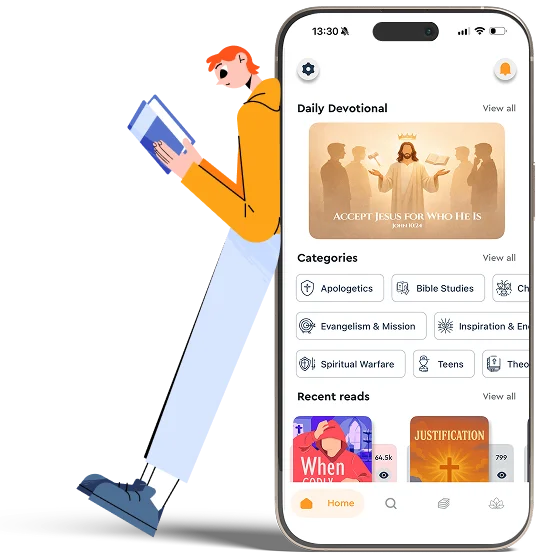
This is exactly the kind of moment Holy Reads was built for. When you can’t find the words or the verse you need at 2 a.m., the app puts honest, Scripture-rooted guidance in your hands instead of leaving you to search alone.
Finding hope after loss doesn’t mean the loss stops mattering. It means you’ve found a place sturdy enough to hold both the grief and the hope at once. The Bible never asked you to choose between them. Neither should you.