

Be honest. You have tried this before.
You bought the book. Maybe it was recommended from the pulpit, or a friend would not stop talking about it. You started strong. First few days, no problem. Then one morning you were running late, and you skipped it. Then you skipped it again. Then the book moved from your nightstand to the floor. Then somewhere under the bed.
And now you feel a low-grade guilt every time someone brings up their reading habit.
Here is the thing. That is not a willpower problem. The whole approach was set up to fail.
Why 10 Minutes a Day Can Strengthen Your Spiritual Life
Most people assume that for something to count spiritually, it has to be long. So they commit to thirty minutes a day and feel guilty when they only manage fifteen. They commit to reading a book a month and feel like a failure when it takes six weeks. The standard becomes a source of shame instead of growth, and eventually they stop altogether.
Ten minutes a day is not the lazy version of a spiritual reading habit. Done consistently, it is more powerful than the ambitious version you abandoned twice already.
Think about how you actually change as a person. Not through single dramatic moments, but through small things repeated until they become who you are. The Psalmist who meditated on God’s word day and night was not doing it in one long sitting. He kept coming back. That returning, that daily decision to show up again, is what shapes a person over time.
Luke 16:10. Faithful with little, trusted with much. That applies here too.
As for when to do it: forget the advice about 5 AM. If you are not a morning person, forcing yourself up an hour early is just adding suffering to your routine. The best time to read spiritually is the time that has the least resistance for you specifically. Lunch. After school drop-off. The ten minutes before your phone pulls you somewhere else. Pick the slot that you will actually use and protect it.
How Book Summaries Make Spiritual Reading Easier to Maintain
Nobody wants to say this, so here it is plainly. The reason you are not reading is not because you are too busy. It is because you are too busy to read badly.
You know the feeling. You sit down with a dense theology book, you are already tired, you read the same paragraph three times, and you retain almost nothing. So you close it. You tell yourself you will try again when you are more focused. More rested. When the kids are older. When work calms down.
That moment never comes. And in the meantime, the habit you actually wanted to build quietly disappears.
A good Christian book summary changes that. Not because it is easier in a shallow sense, but because it removes the specific friction that keeps stopping you. A well-written summary of something like The Pursuit of God or Mere Christianity gives you the real argument, the actual ideas that made the book worth reading in the first place, in a format your tired Tuesday morning brain can genuinely absorb.
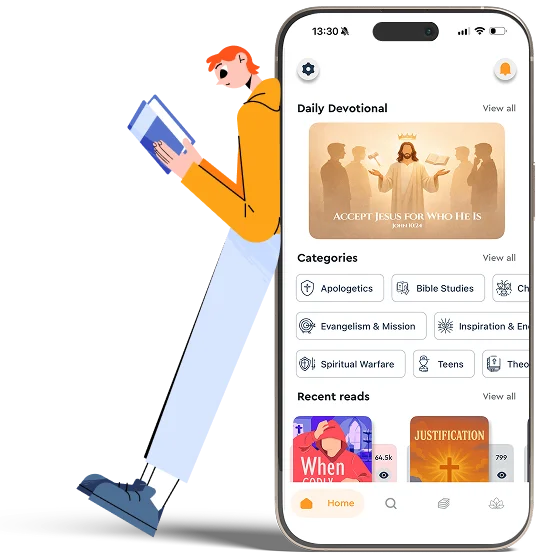
This is what Holy Reads does. It is a library of Christian book summaries, built around writers like C.S. Lewis, A.W. Tozer, and Tim Keller, for people who take their faith seriously but cannot always sit down with a full book. The substance is there. What is gone is the barrier that kept making you quit.
And honestly, finishing a full book was never the point. The point was always to let the ideas get inside you and do something. A summary you read slowly and carry into your day will do more for your faith than chapters you rushed through and forgot.
Creating a Simple Daily Spiritual Reading Routine
The reason most Christian habit-building attempts collapse is not laziness. It is too many things starting at the same time.
Someone gets inspired, and suddenly they are going to read the Bible every morning, keep a prayer journal, work through a devotional book, and start memorizing Scripture. For about four days, they do all of it. Then one morning they miss the journal. Then the devotional. Then they feel so behind on the system that they abandon the whole thing.
Sound familiar?
Start with one thing. One reading, ten minutes, the same time every day. That is it for the first month. No additions, no upgrades, no bonus content.
What does ten minutes actually look like? Five minutes reading. Five minutes sitting with what you just read. Not writing anything profound. Not constructing a theological argument. Just letting the question sit: what does this change, even slightly, about how I see today?
That question is where the habit lives. Everything else feeds it.
Turning What You Read Into Reflection and Practical Action
Here is something uncomfortable. You can read every Christian book ever written and come out the other end exactly the same person you were when you started.
James does not call this laziness. He calls it self-deception. You can feel engaged. You can feel like you are growing. You can underline things and feel genuinely moved in the moment. And still be completely unchanged by Thursday.
The gap between reading and changing is reflection. Not a forty-five-minute journaling session. Not a complicated prayer framework. Just the honest question after you read: if this is true, what does it actually ask of me?
Then one answer. Specific. Small.
If you read something about forgiveness, you do not need to resolve every difficult relationship by the end of the week. You need to think of one person and decide what one step looks like. That is the whole assignment. One idea, one application, repeated across enough days that it starts to reshape how you actually think and act.
That is what people mean when they talk about spiritual formation. Not a feeling. Not information. A slow accumulation of small decisions made by someone who kept showing up, even on the days when ten minutes felt like all they had to give.
Especially on those days.