

Nobody decided to cut fasting out of Christianity. It just got crowded out.
Convenience did most of the damage. Food is everywhere, cheap, and fast. Hunger used to be an unavoidable part of life that pointed people toward dependence on God. Now it’s a problem you solve in four minutes with a drive-thru window. The discomfort that used to drive people to prayer gets erased before it has a chance to mean anything.
Comfort culture did the rest. Christianity in the West has quietly absorbed the idea that a good spiritual life should feel good. Fasting doesn’t feel good. It’s hard, it’s awkward, and it doesn’t photograph well for a testimony. So it got filed under “extreme” or “for monks” instead of “for you.”
Here’s the part that should bother you: the early church didn’t see fasting as optional intensity for spiritual overachievers. They saw it as maintenance. Acts 13 shows the church fasting before they send out Paul and Barnabas. Acts 14 shows them fasting again while appointing elders. This wasn’t a special occasion practice. It was how they made decisions.
You inherited a faith that used to run on this rhythm. You just never got handed the rhythm itself.
What the Bible Actually Says About Fasting
Jesus didn’t say “if you fast.” He said “when you fast” (Matthew 6:16). That’s not a small grammatical detail. He treated it as a normal part of following God, just as he treated prayer and giving.
But he also drew a hard line around motive. The Pharisees fasted to be seen fasting. They disfigured their faces so everyone would know how spiritual they were being. Jesus called that out directly and told his followers to do the opposite: wash your face, act normal, fast in private. The value of the fast has nothing to do with who notices.
Isaiah 58 goes further and makes the point uncomfortable. God’s people were fasting and still asking why God wasn’t responding. The answer wasn’t more intensity. It was that their fasting had become disconnected from how they treated other people. Real fasting, the chapter says, loosens the chains of injustice and shares bread with the hungry. Skipping a meal means nothing if it doesn’t soften you toward the people around you.
Then there’s the example nobody talks around: Jesus himself, fasting forty days in the wilderness before he faced the temptations that would define his ministry. He didn’t fast because he needed to prove something to God. He fasted because it prepared him for what was coming.
That’s the pattern. Fasting clears space. What fills that space, prayer, conviction, dependence, that’s the actual point.
Hour by Hour: My 24-Hour Fasting Experience
Hour 4 felt like nothing. I’d skipped breakfast plenty of times. No big deal.
Hour 8 is where it got interesting. Lunchtime came and went, and the absence of food stopped being abstract. My stomach made noise. My focus kept drifting toward the kitchen like it had a magnetic pull. I prayed instead of eating, and the prayer felt thinner than I wanted it to. Distracted. Half-present.
Hour 12 brought the headache. Mild, persistent, the kind that makes you irritable without you noticing you’re irritable. I snapped at a text message that didn’t deserve it. That’s when it hit me: I wasn’t just hungry for food. I was being shown how much of my patience runs on blood sugar, not character.
Hour 16 was the low point. Energy gone, motivation gone, the temptation to “just have a little something” was loud and constant. This is the hour most people quit, and I understood exactly why. The body argues hard for comfort, and it argues in a voice that sounds completely reasonable.
Hour 20 is where something shifted. The hunger didn’t disappear, but my relationship to it changed. I stopped negotiating with it and just let it sit there. Prayer got quieter and more honest. Fewer requests, more attention. I wasn’t performing devotion. I was just present because nothing else was competing for my focus.
Hour 24 ended with a piece of bread and a glass of water, eaten slowly, on purpose. It tasted like more than bread.
What I Learned About Hunger, Discipline, and Dependence on God
Hunger is loud, but it’s not in charge. That’s the lesson the whole day was building toward. Western life trains you to treat every appetite as an emergency that needs immediate resolution. Hungry, eat. Bored, scroll. Uncomfortable, fix it now. Twenty-four hours without food breaks that reflex and shows you it was never actually necessary. You can sit with discomfort. You can function inside it. You can even hear God more clearly because of it.
The discipline isn’t really about food. It’s about discovering how much control you’ve handed over to your impulses without ever noticing you did it. Skipping meals exposes that pattern in a way no amount of reading about self-control ever could.
And the dependence part is the one that actually matters. Somewhere around hour 16, when the easy answer was just to eat and stop the discomfort, the choice to stay in it became a small, physical act of trust. Not eating became a way of saying: I’m relying on something other than what’s in front of me right now.
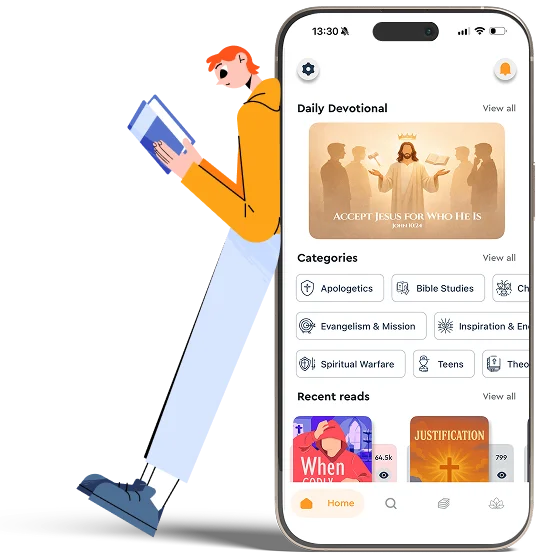
If you’re going to try this, don’t go in blind. A clear structure helps, especially the first time, and that’s the gap Holy Reads was built to close. It walks you through guided fasting plans paired with Scripture and prayer prompts timed to the hours you’ll actually feel it, so you’re not just white-knuckling through hunger with nothing to anchor it to.
Twenty-four hours won’t transform your life. But it will show you something true about yourself that a full stomach has been hiding. That’s worth one day.