

You didn’t lose your faith overnight. It happened quietly. Prayer started to feel like talking to an empty room. Scripture felt flat. The warmth you once felt in worship disappeared, and you couldn’t explain why. You weren’t hit by a crisis of belief. You just… stopped feeling anything.
That’s the spiritual desert. And it’s more common than anyone in your church is likely to admit.
Why God’s Silence Doesn’t Mean His Absence
Here’s the thing about silence: it’s not the same as absence.
When you’re experiencing spiritual dryness, the instinct is to treat it as evidence. Evidence that God has moved on, that your faith was never real, or that you’ve done something to push him away. But silence in a relationship doesn’t mean the relationship is over. It means something else is happening.
God’s silence is well-documented in Scripture. David cried out, “How long, O Lord? Will you forget me forever?” (Psalm 13:1). That’s not a man who doubted God existed. That’s a man who believed fully and still felt nothing. Job argued with God across thirty-seven chapters. The silence didn’t mean God wasn’t there. It meant God was doing something that couldn’t be explained in real time.
The dark night of the soul, as St. John of the Cross described it, isn’t spiritual failure. It’s a recognized stage of faith. The feelings left. God didn’t.
What the Bible Says About Seasons of Spiritual Drought
The Bible doesn’t treat spiritual deserts as accidents. It treats them as terrain.
Moses spent forty years in the wilderness before his burning-bush moment. Israel wandered for forty years before entering the promised land. Jesus himself was led by the Spirit into the desert immediately after his baptism. Notice that: the Spirit led him there. It wasn’t an attack. It was a path.
Elijah, after his greatest victory, collapsed under a tree and asked God to take his life. He wasn’t weak. He was depleted. And God’s response wasn’t a sermon. It was bread, water, and rest. Then a still, small voice.
This is consistent throughout Scripture: when God feels distant, when you’re losing faith in the very feeling of faith, the desert isn’t a punishment. It’s a place God meets people when everything else has been stripped away.
That doesn’t make it easy. It just makes it meaningful.
5 Practical Steps to Seek God When You Can’t Feel Him
1. Stop waiting to feel ready before you pray. Pray without feeling. Say exactly what’s true: “I don’t feel you. I don’t know if you’re listening. But I’m here.” That’s not a weak prayer. That’s the most honest prayer you’ve ever prayed, and honesty is the fastest route back.
2. Return to Scripture, but read it differently. Don’t go looking for inspiration. Go looking for honesty. Read the Psalms of lament. Read Job. Read Jeremiah. Let the Bible show you that doubt and spiritual dryness have always been part of the story, not departures from it.
3. Stay in community even when it feels hollow. When God feels silent, isolation amplifies it. You don’t have to perform. You don’t have to pretend. But you do need to stay near other people who are seeking him. Their faith can carry you when yours feels like it has run dry.
4. Reduce the noise enough to hear anything. Most people in a spiritual desert fill the silence with more noise. More podcasts, more content, more stimulation. Try the opposite. Sit in actual quiet for ten minutes. Don’t expect a vision. Just stop drowning out whatever might be there.
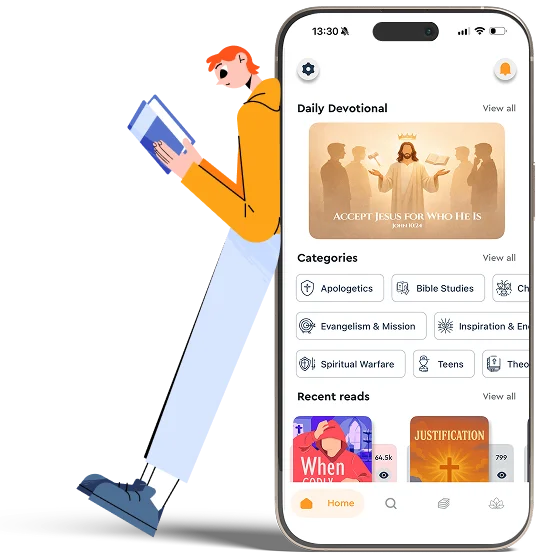
5. Read what others who’ve been through this have written. The desert has been described before. Mystics, theologians, and ordinary Christians have mapped this terrain. If you don’t know where to start, Holy Reads distills serious Christian books into focused summaries you can actually read in one sitting. It’s a practical way to access centuries of wisdom when you don’t have the bandwidth for a 400-page book.
How Spiritual Deserts Can Become Places of Transformation
The desert does something that comfort can’t.
When the feelings are gone, when the spiritual highs aren’t available, you find out what your faith is actually built on. Is it built on emotion? On a particular church experience? On a season of life that’s now passed? The desert burns that away. What’s left is either something real or nothing at all. And for most people who push through, what’s left is real.
This is what makes the desert so different from just a bad season. A bad season passes. The desert reshapes you. Jacob wrestled all night and came out limping. He also came out changed. The limp was the proof.
If you’re in the desert right now, you’re not disqualified from faith. You might be closer to the center of it than you’ve ever been. Sit with that. Keep showing up. The silence isn’t the end of the story. It never has been.